Written by: Matt Black
If you were searching for an obvious candidate to help revive Italian mechanical watchmaking, OISA’s COO Giancarlo Rota probably wouldn't have made the list.
Unlike many of the industry figures I've spoken with since we launched Timepiece World Journal, his story doesn't begin with a treasured family heirloom or childhood afternoons spent peering into movements. In fact, by his own admission, he discovered watchmaking relatively late.
"I started working at OISA," he told me through an interpreter, "and it immediately fascinated me."

Although he spent time around Switzerland's Vallée de Joux years earlier – a region synonymous with some of the world's finest watchmaking – he admits he never fully appreciated what surrounded him.
"I often spent time there, but I was never particularly curious about all the companies working away. Perhaps because I had not yet come close enough to the world of watchmaking."
It seems that a genuine curiosity, more than say, destiny, became the turning point.
What began as an opportunity to work with the company gradually evolved into something much deeper.
"I simply fell in love with the company and with watchmaking."
It's an understated beginning for someone now helping lead one of Italy's most ambitious manufacturing projects.
OISA's story begins in 1937, when the original company manufactured movements in Italy, even supplying components to Swiss firms during an era when European watchmaking looked very different than it does today.
Like so many others, however, OISA became another casualty of the quartz crisis.
Its doors eventually closed.
For decades, the name remained little more than a footnote in Italian horological history.
Then came a second chance.
A group of entrepreneurs, led by CEO Benedetto Perrotta, believed the company deserved another life – not necessarily as a museum piece, but as a modern manufacture capable of producing high-quality mechanical movements once again.
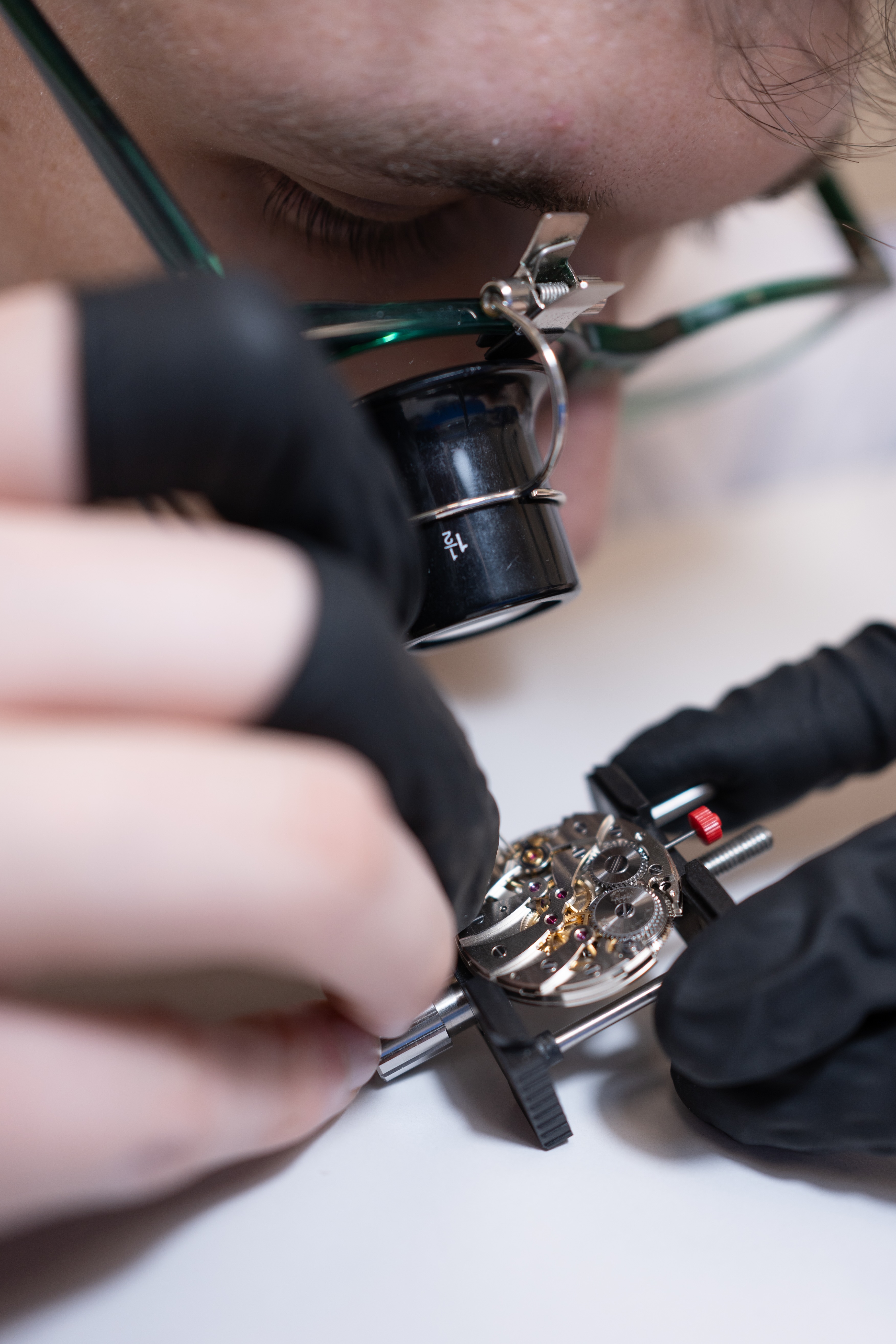
For Giancarlo, the appeal wasn't simply preserving history.
"It was fascinating to discover that Italy once had manufacturers that also supplied Switzerland," he said. "Today we aim to celebrate and highlight the passion we possess, continuing to develop it and helping people appreciate its value."
During our conversation, it’s clear to me that OISA isn't attempting to recreate the past, but rather build on it.
Rebuilding a movement manufacture in Italy certainly sounds romantic.
But as you can imagine, the reality is far more complicated.
Unlike Switzerland, where suppliers, specialists and generations of expertise exist within a remarkably concentrated ecosystem, Italy no longer possesses the same infrastructure.
"The greatest challenge is the lack of a supply chain," Giancarlo admitted.
While OISA machines its bridges and mainplates, decorates, assembles and tests every movement in-house, many specialised components still need to come from Switzerland.
"To give you an idea," he explained, "even something as simple as a screw is not currently feasible to produce in Italy due to its specific requirements."
The logistical hurdles don’t stop there.
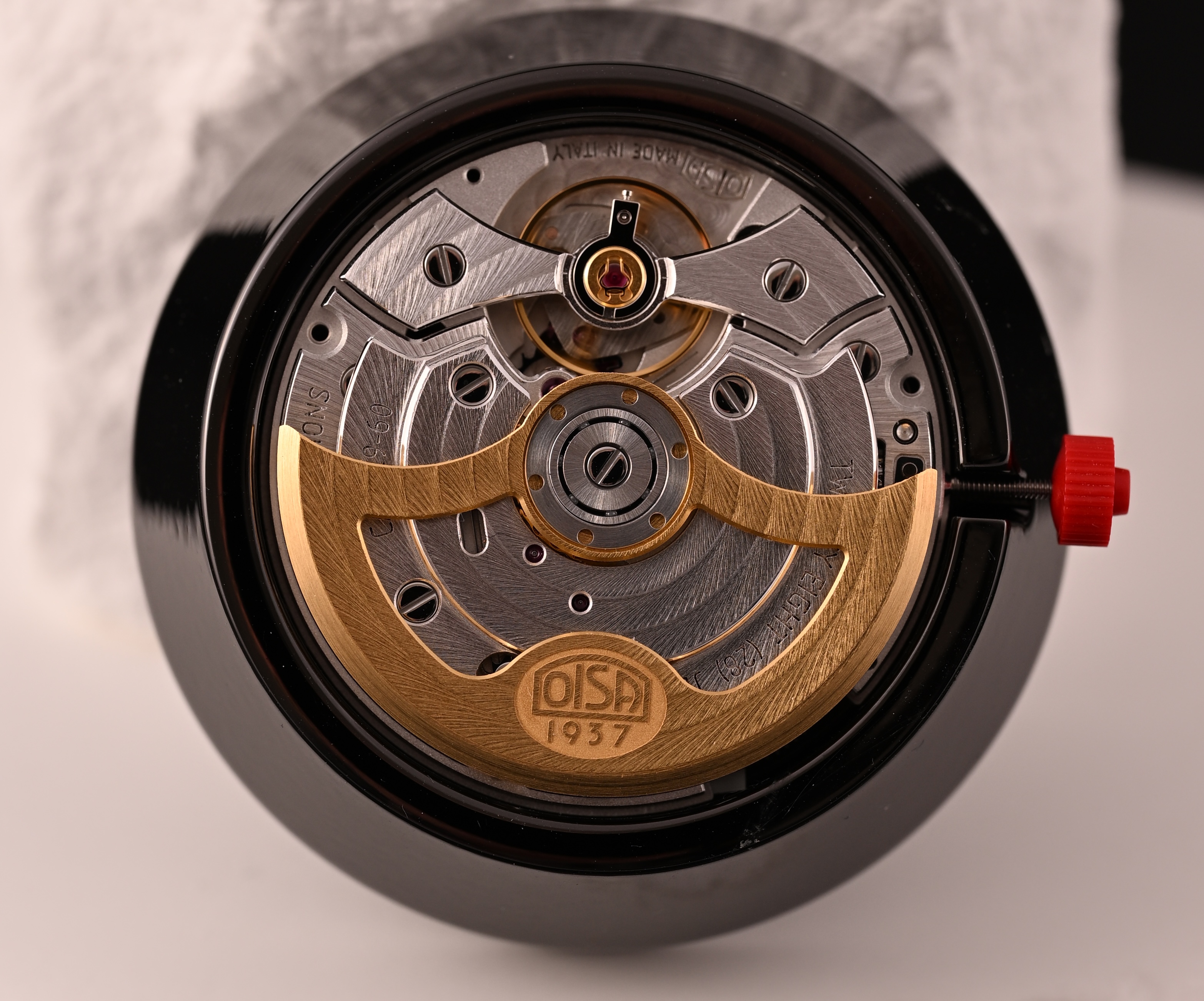
Evaluating suppliers often requires crossing borders in person because quality simply can't be judged over a video call.
Everything takes more time, demands a greater effort on Giancarlo and the OISA team.
And yet, the challenges don’t seem to faze them.
If anything, it reinforces why the work matters.
"It was a craft that had been lost in Italy – or perhaps, simply dormant," Giancarlo reflected. "Like all valuable things, it deserved a second chance."
Perhaps the most surprising revelation during our conversation wasn't about the movements.
It was this: OISA's entire operation includes just six team members.
Machining components, decorating movements, assembling calibres, performing quality control…
Oh, and managing production and running the day-to-day operations of the company….
Six people, all wearing multiple hats.
"Every one of us has a different task inside the company," Giancarlo explained. "But everyone is also capable of doing someone else's task because we are a small company, and this is absolutely necessary."
There's something quietly remarkable about that.
Luxury watchmaking often evokes images of sprawling manufactures employing hundreds of specialists.
But OISA, like many smaller independents, operates differently.
"We give a little part of ourselves to every movement," he said.
That sense of shared ownership appears to define the company as much as any technical specification.
Walking through the workshops today, Giancarlo says what fills him with the greatest pride isn't the machinery.
It's the people.
"Seeing the members of our team work with enthusiasm and reflecting on everything we have managed to achieve over the years despite the limited resources available to a company of our size – I find this inspiring."
Most watch enthusiasts enjoy admiring a movement through a case back.
But it’s hard for some to fully appreciate what goes into creating one.
Giancarlo believes that's one of the industry's greatest misconceptions.
"It is difficult for outsiders to truly understand what it means to create a movement."
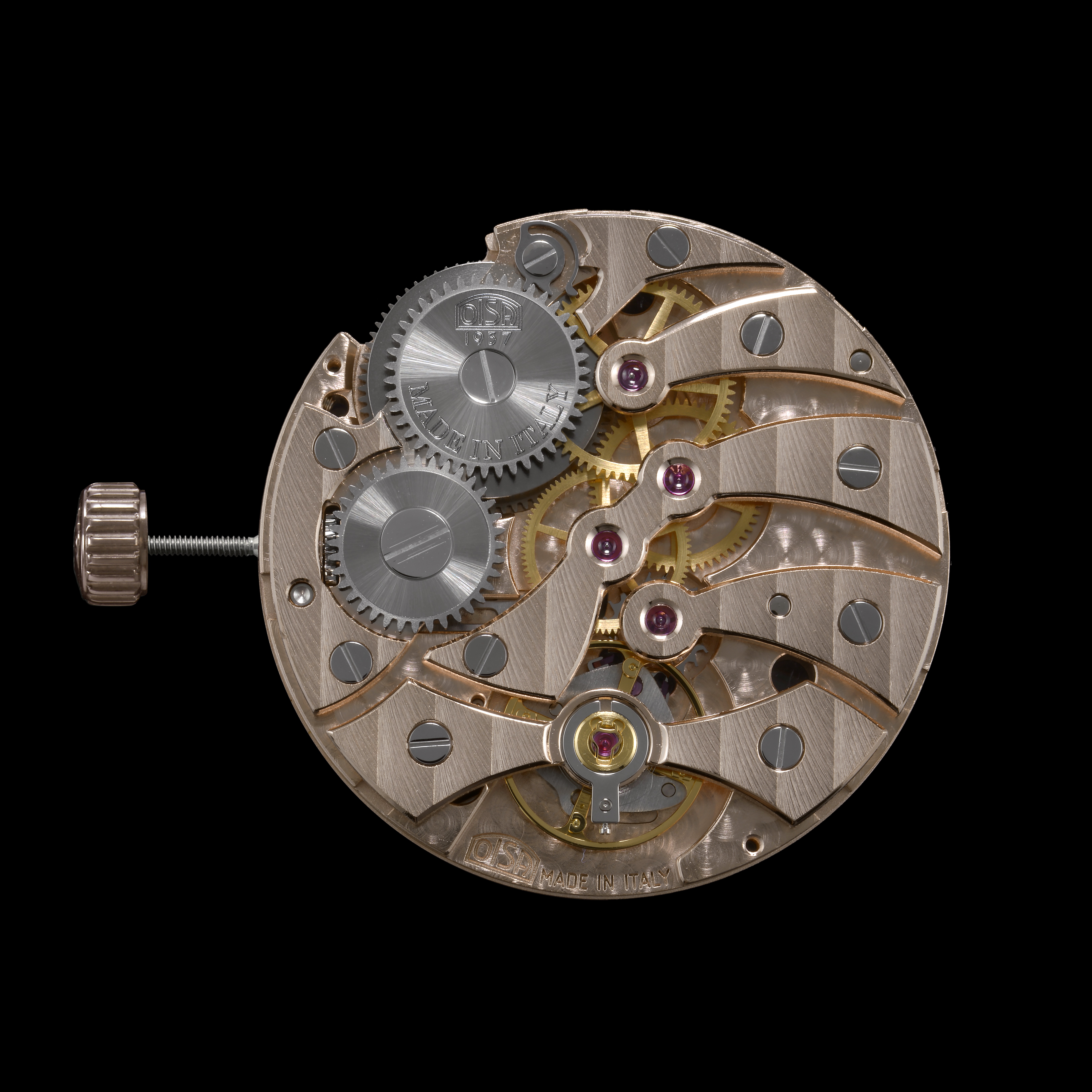
Only after visiting the manufacture, he says, do people begin to grasp the complexity involved.
A calibre isn't simply assembled.
It represents dozens of specialized disciplines – from machining brass components and producing wheels to jewel setting, decoration, galvanic treatments, assembly and testing.
Each stage requires different expertise, and many still rely on human hands.
"In our manufacture, many stages remain manual because attention to detail is essential," he explained. "Sandblasting, decoration, assembly and quality control are all carried out in-house."
In an era increasingly defined by automation, that human element remains central to OISA's philosophy.
Success, for Giancarlo, has never arrived as one defining moment.
There was no single breakthrough that convinced him OISA had finally arrived.
Instead, it has been built through countless incremental victories.
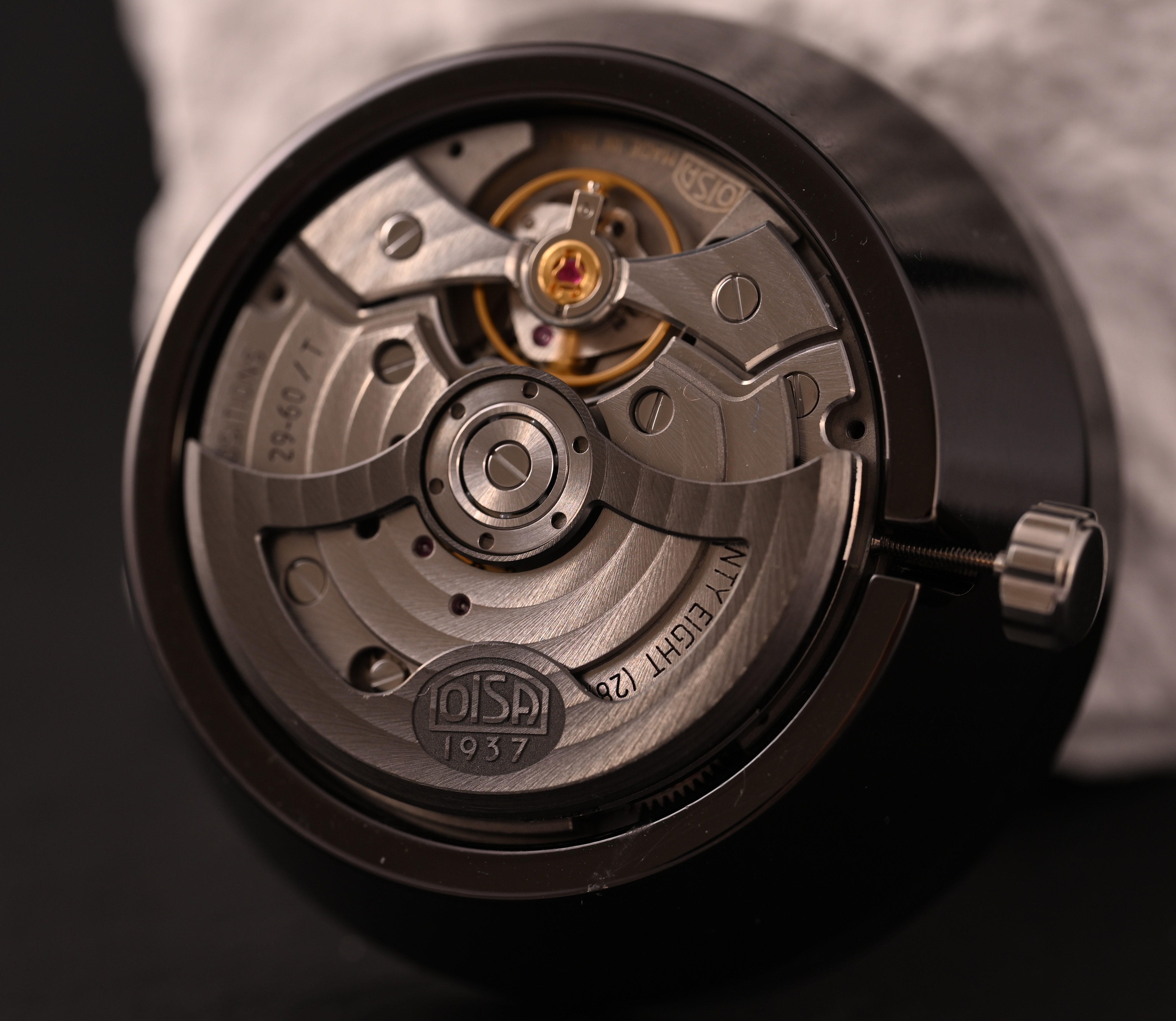
"The manual-winding calibre had already begun when I joined," he said. "Since then, we have continued to evolve the movement, developed the automatic calibre and started creating our own watches. There was no single defining moment – rather, a series of small but meaningful steps."
Perhaps that's fitting, given the size of the team.
When I asked what he hoped people might write about his contribution twenty years from now, his answer was remarkably free of ego.
"It would be enough for me if OISA secured a permanent and distinctive place within Italian watchmaking and beyond."
Then he offered what may be the simplest – and most revealing – line from our entire conversation.
"Individual contributions are temporary," he said. "What matters is always looking forward."
To me, it’s clear that OISA 1937 isn't trying to recreate a lost past.
It's trying to ensure Italian movement manufacturing has a future.
That is the meaningful legacy that Giancarlo and his team are creating each day.
.jpg)
%201.png)
