Written by: Brent Robillard
Staring into the undulant swells of the Patek Philippe Calatrava ref. 5177G-051 “Bordeaux” at the Rare Handcrafts exhibition in Geneva—lustrous beneath layers of enamel—one cannot help but think that a watch like this was made by love. It is in these delicate, shimmering patterns that the ancient art of guilloché reveals itself: not merely a decorative flourish, but a bridge between past and present, a testament to human ingenuity, and a powerful expression of the watchmaker’s ethos.
Guilloché, or engine turning, begins with intricate, repeating patterns mechanically engraved into metal surfaces using specialized rose or straight-line engines. These machines, almost mythical in their own right, have carried a craft forward from the 16th century to today, when Abraham-Louis Breguet first transformed the mechanical artistry into a horological icon. Yet guilloché’s story is not one of static tradition; it is an ongoing journey of emotion, perseverance, and rediscovery—best told through the lives of watchmakers like Dave Brailsford of Garrick and Bradley Taylor of Bradley Taylor Watches.
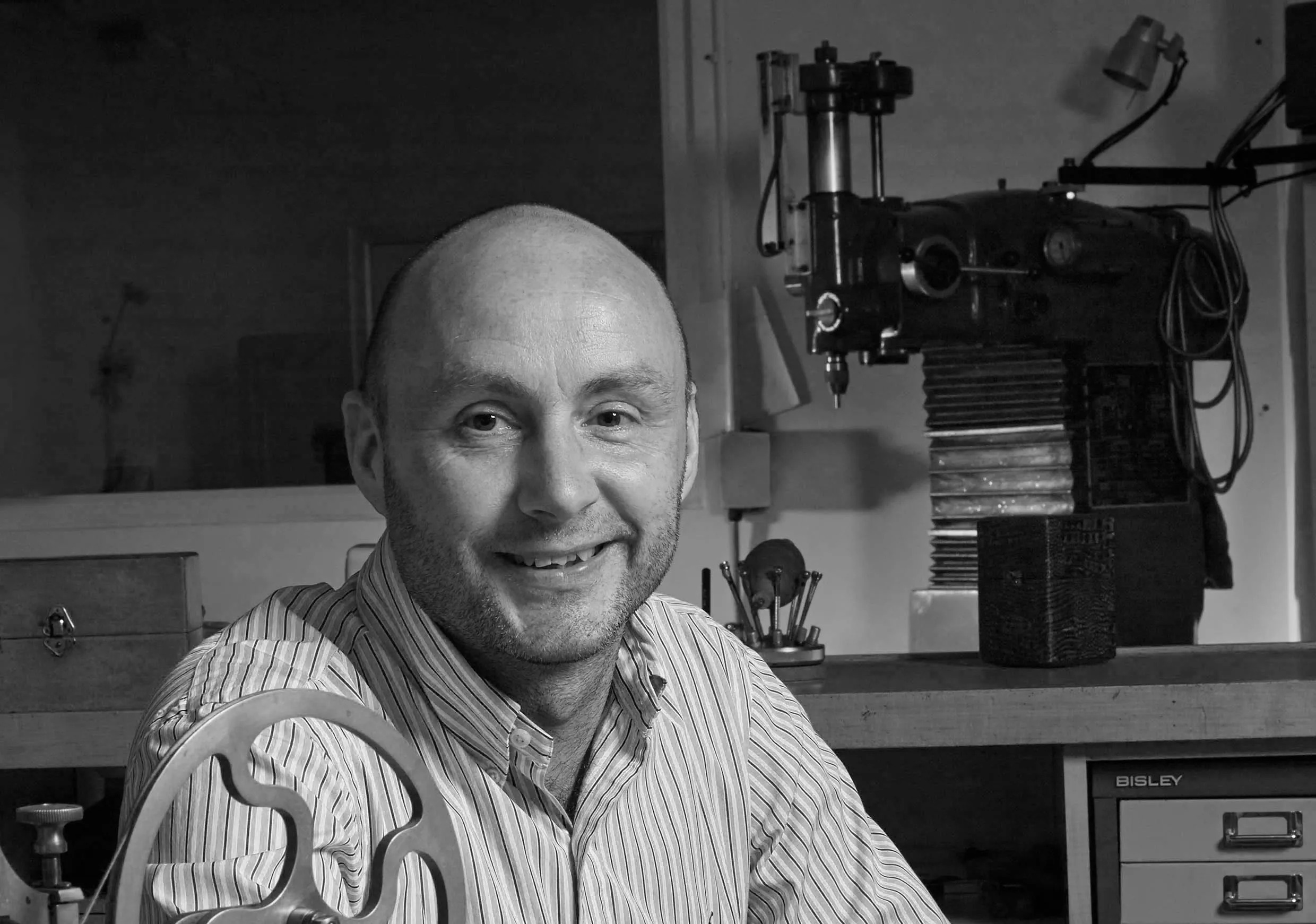
Today, the essence of guilloché remains remarkably unchanged. “Engine turning (or guilloché) is a method of machine engraving precise, repeat straight line or geometrical patterns,” Brailsford explains. “Using a mechanical rose engine or ‘decorative lathe,’ an unlimited variation of patterns can be created and engraved into brass or silver dials, giving an almost three- dimensional, decorative finish that catches and reflects the light beautifully.” Bradley Taylor adds, “There are an incredible amount of patterns and choices that can be made, and a wide variety of results achieved.”
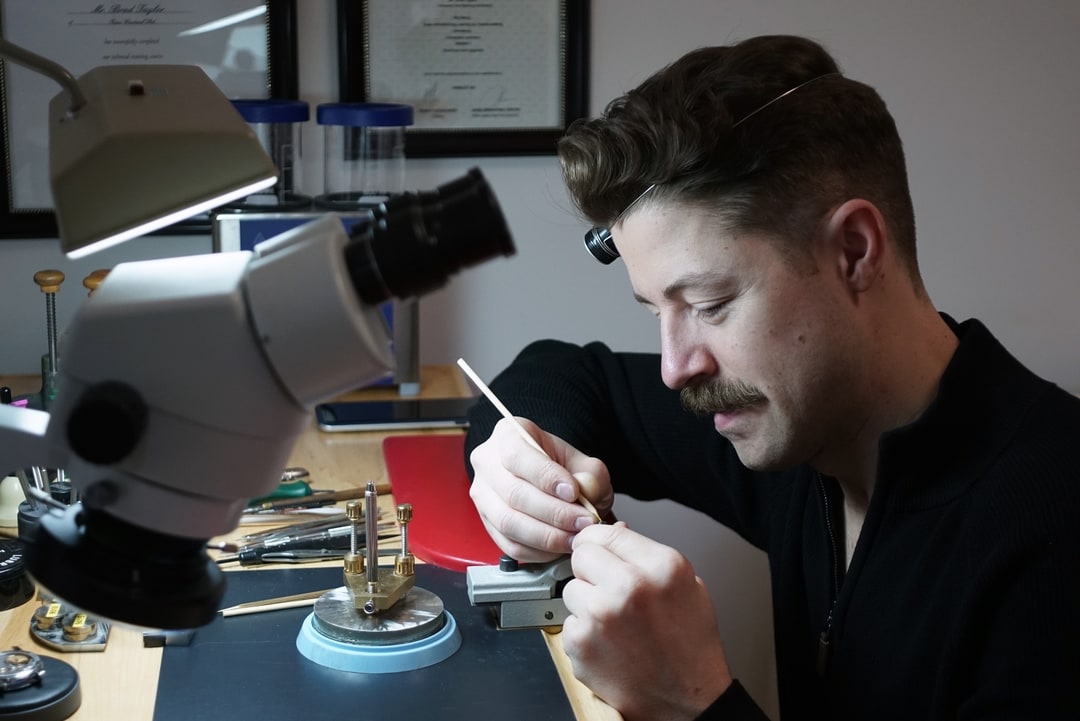
Yet keeping this timeless craft alive is far from easy. These machines—often over a century old—are increasingly rare and staggeringly expensive, with most snapped up long ago by major watch groups. Brailsford recounts how early lathes “are becoming increasingly rare and rising in price,” while Taylor describes his own odyssey in pursuit of a straight-line engine: “I drove 50 hours round trip to pick it up in Scottsdale, Arizona… This straight-line engine is approximately 160 years old, made before the lightbulb was invented!”
Finding a machine, however, is only the beginning. Restoring these mechanical marvels demands not only technical skill, but patience and reverence. Brailsford’s machines were “completely stripped down… cleaned, restored or re-engineered.” Taylor spent three painstaking months disassembling, repairing, and reassembling his rose engine—often crafting replacement parts to revive its long-dormant precision. “Setting up the machine is tricky and takes time,” Taylor admits. “Once everything is dialed in, the actual cutting process can vary in terms of how much skill is required to execute the work properly.”
This journey of restoration is transformative. As Taylor reflects, “Once I started to dip my feet into this craft, I quickly became obsessed.” That obsession is not a burden, but a calling—one that turns each engraved dial into a personal signature of the watchmaker’s quest, determination, and artistry.
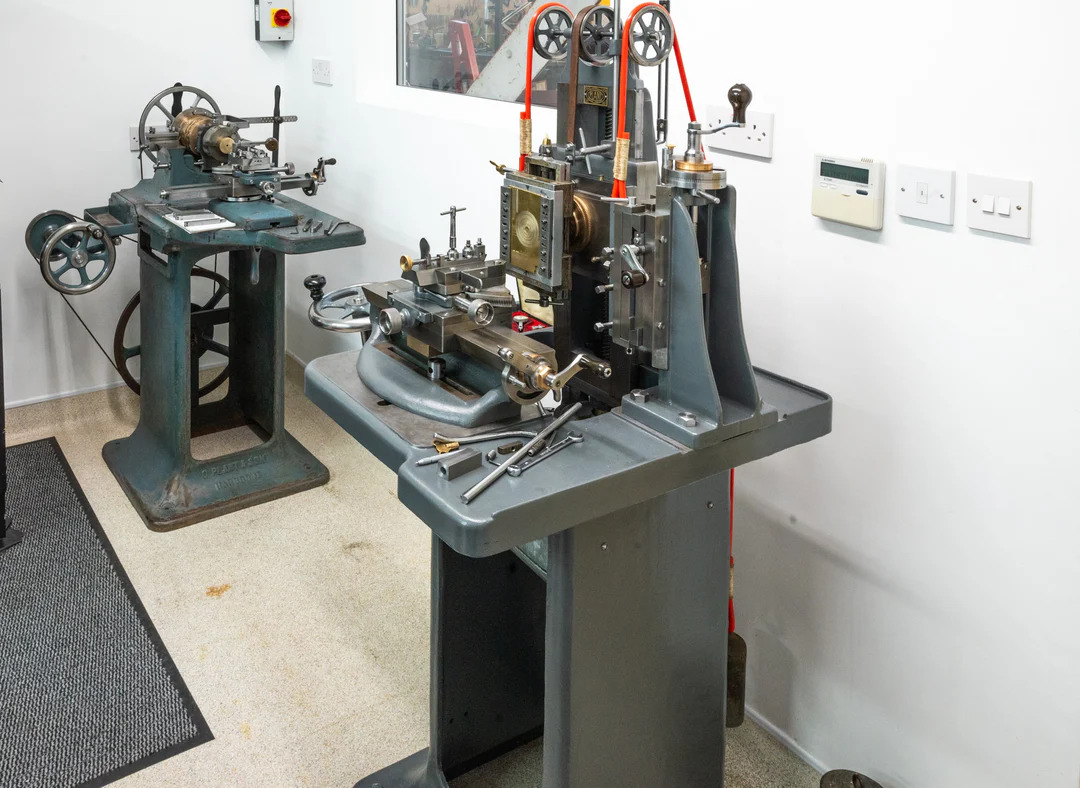
Nowhere is this more evident than in the story of Garrick’s revival of British guilloché. In 2017, a chance phone call altered the course of the brand forever. “We were contacted out of the blue by a well-known engine turner who used to work with Derek Pratt,” Brailsford recalls. “Sadly, he had a terminal illness and didn’t have long to live. He was insistent that his lathes end up in our workshop after his death. We were told quite abruptly that he was going to name a price and that if we tried to negotiate in any way, we would never hear from him again. Of course, we accepted.” Brailsford’s partner drove to collect the machines and received a crash course in their operation, setting in motion a year-long restoration that would enable Garrick to produce hand-turned guilloché dials in-house and reintroduce the craft to British watchmaking.
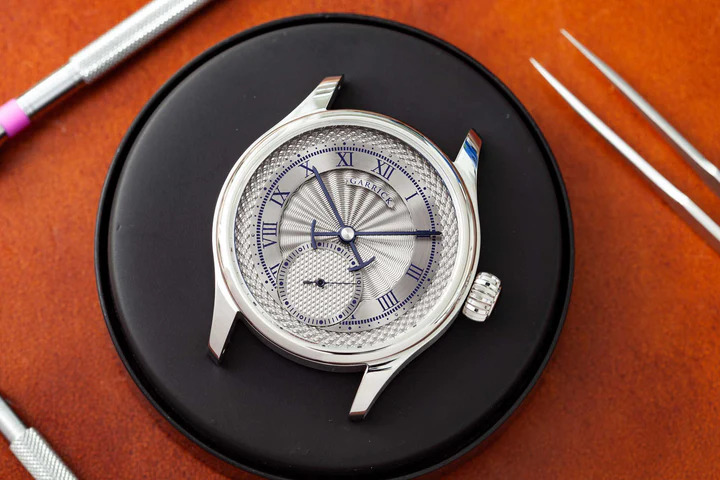
These machines now sit in Garrick’s Norwich atelier alongside a vast collection of traditional watchmaking tools—many more than a century old. “The rose and straight-line engines are a pleasure to operate, and the end results speak for themselves, thus making it very interesting work for our watchmakers who are all keen to keep the art alive,” says Brailsford. “In this respect, the machines have been very influential, and from a design standpoint, the dials add to the handmade aesthetic of our timepieces.” Models like the Garrick S7 or the Regulator Mk2 embody this tenet, where bespoke guilloché patterns become not just embellishment, but a craftsman’s signature. “It’s keeping a dying craft alive,” Brailsford adds. “It’s nice to know a craftsman has spent time adding what can be considered his personal signature.”
In Canada, Bradley Taylor’s path took him from curiosity to fervent devotion. “I originally, before the opportunity to acquire a machine opened up, did not pay that much attention to guilloché,” he admits. But once he acquired his rose engine and began learning its intricacies, he fell in love with the process: “Of all my machines, my rose engine is certainly the most enjoyable to use.” His work, seen in timepieces like the Lutria, fuses classical hand-turned guilloché with distinctly Canadian design language—employing local materials, collaborating with fellow artisans, and crafting bespoke typography. Taylor’s dedication has not only redefined his own work but reshaped his creative identity: “I now consider guilloché a critical element in my dialmaking… I plan to use it in much of my work going forward.”
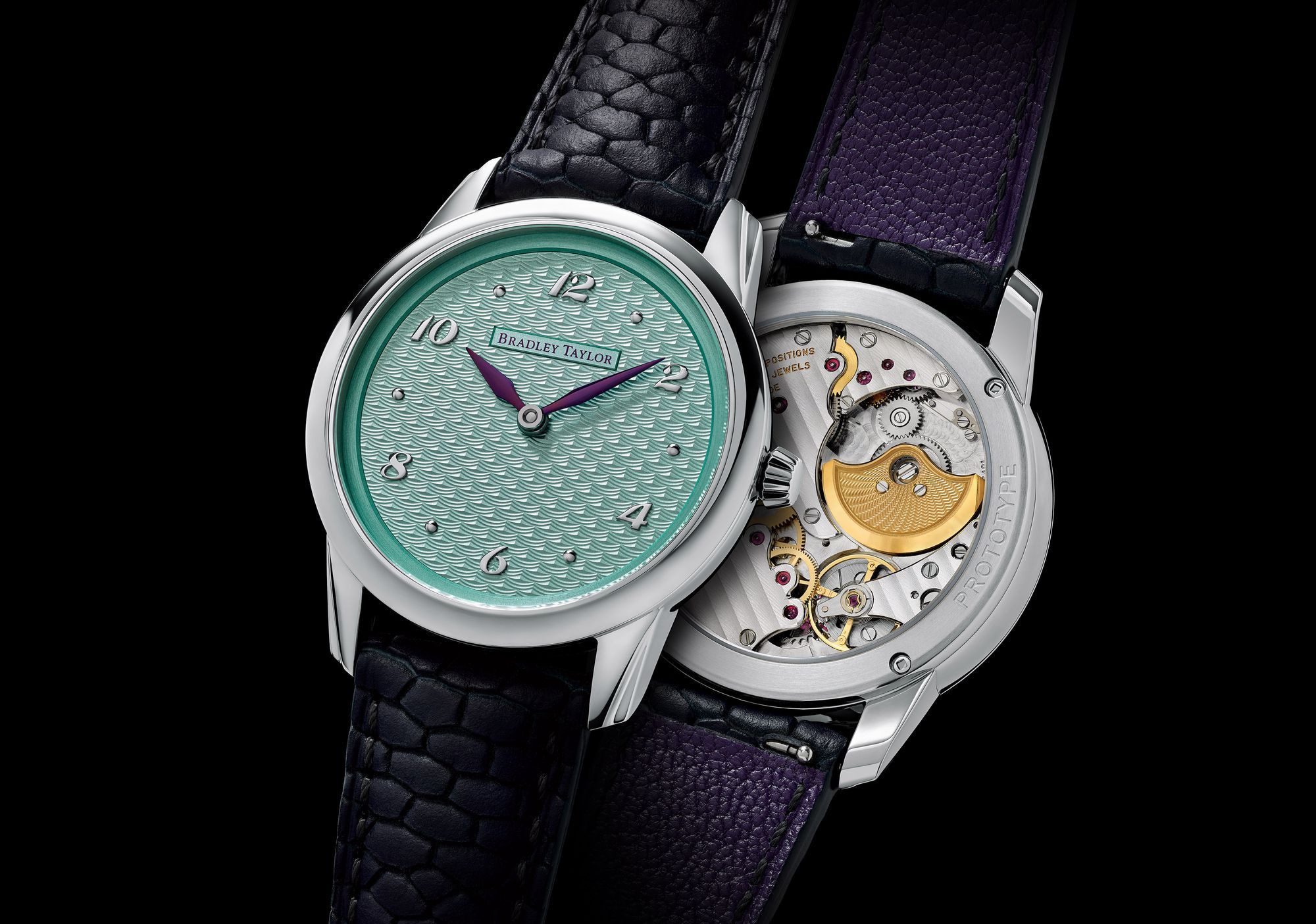
For both Brailsford and Taylor, guilloché is not simply a technique, but an emotional connection to the watch itself—a dance of patience, precision, and artistry that demands total immersion. Each dial, each gleaming wave of light, captures the countless hours of trial, error, and mastery. As Taylor so aptly puts it, “Like many aspects of high-end watchmaking, it’s all about craft. Guilloché done on an antique machine by a skilled operator—just as it was done many years ago—can certainly appeal to one’s sense of appreciation.”

Beyond these two artisans, the guilloché tradition lives on in others who share their devotion. Atelier Wen collaborates with China’s only known master guillocheur, Cheng Yucai, who built his own rose engine from scratch. Finnish master Kari Voutilainen crafts some of the world’s most exquisite guilloché dials at Comblémine SA. Torsti Laine offers collectors a choice of intricate patterns in his GG3 models, while Jochen Benzinger in Pforzheim continues to set the benchmark for traditional engine turning.
In the end, guilloché endures because it is more than engraving—it is a story of the watchmaker’s quest: the hunt for rare machines, the painstaking restoration, and the quiet joy of seeing light dance across a freshly turned dial. Thanks to dedicated artisans like Dave Brailsford and Bradley Taylor, this story continues—one cut, one curve, one masterpiece at a time.
%201.png)
