Spend enough time around seasoned watch enthusiasts and collectors, and a pattern begins to emerge. Ask where the finest haute horology watches are made and the answer arrives quickly: Switzerland.
Ask where the most interesting ones are coming from, and the response becomes less certain.
That ambiguity is relatively new in the world of horology.
Two decades ago, the idea of “independent watchmaking” existed, but it occupied a narrow corridor of the industry—more curiosity than a movement. Today it has become one of the defining forces in modern horology. Not because Switzerland has weakened, but because watchmaking has systematically and quietly stopped belonging to any one country.
What has emerged instead is a dispersed ecosystem of small ateliers, individual watchmakers, revived traditions and entirely new business models which did not really exist only a mere 25 years ago. The geography of horology has not been replaced - it has been multiplied.
Before understanding what changed, it is worth understanding what existed before it.
Switzerland did not merely dominate mechanical watchmaking through the twentieth century—it structured it. Industrial clusters in Geneva, the Jura and Biel created a production system capable of combining scale with exceptional finishing. Over time, Swiss exports came to define global luxury horology, still accounting today for overwhelmingly majority of high-end mechanical watch value produced worldwide.¹
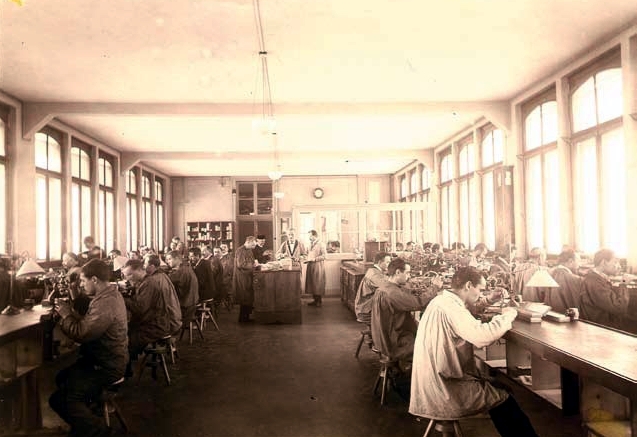
The strength of the Swiss system lay in its completeness: component suppliers, movement manufactures, case makers, dial specialists and final assemblers operating in a tightly integrated ecosystem.
Even now, Swiss watch exports remain above CHF 25 billion annually, reflecting not only demand but the deep concentration of technical expertise in the region.²
But systems built for scale tend to produce their own counter-reaction.
As the largest maisons expanded into vertically integrated luxury groups in the early 2000s, something quieter began to form at the edges.
Not opposition. Fragmentation.
Watchmaking, historically, was an industry mediated by retailers, large scale trade fairs, and print media. If a watchmaker was not distributed through these established channels, they were effectively invisible to the global horology market.
That changed with forums, blogs and eventually social platforms. Early communities such as Watchuseek and PuristSPro created an audience that was no longer passive.³ Suddenly, obscure independent projects could be discussed, dissected and shared globally without institutional gatekeeping. Fellow enthusiasts found communities that openly discussed timepieces and the horology industry, and it was open to all who chose to venture into the social platforms.
Then came Instagram. Then YouTube. Then direct-to-consumer brands.
A watchmaker in a small workshop was no longer dependent on a trade show such as Baselworld to be discovered. They only needed a finished watch and a camera.
The effect was subtle at first and as it gained momentum, became irreversible.
If Switzerland represents systemized excellence, Germany represents restraint with intention.
The revival of Glashütte as a watchmaking centre has been one of the most important developments outside Switzerland. Brands such as Nomos Glashütte demonstrated that design clarity could become a form of identity rather than limitation. Clean typography, restrained dial architecture and in-house movement development established a modern German aesthetic that feels distinct rather than derivative.
Similar to the Swiss Made label requirements if a watch is to incorporate the name Glashütte within its nomenclature a minimum of 50% of the movements value much be created locally in the town.
Alongside this, independent ateliers such as Lang & Heyne and Moritz Grossmann pushed further into traditional finishing techniques, often echoing nineteenth-century Saxon watchmaking principles while refining them with contemporary precision.
Within this German revival, Kudoke occupies a particularly interesting position.
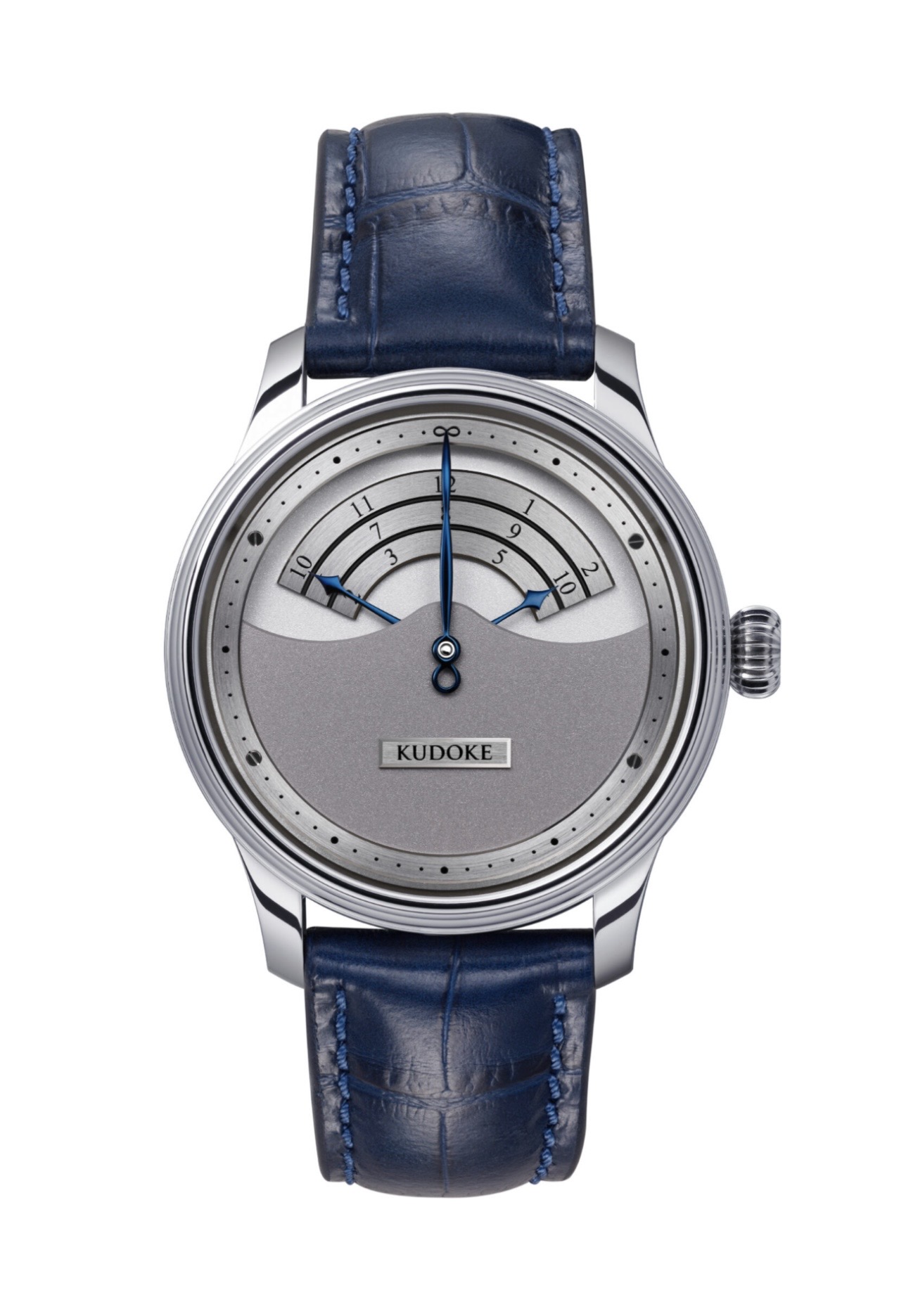
Founded by Stefan Kudoke, the brand represents a form of independent watchmaking that deliberately resists industrial language. The watches are not designed to compete on scale or complexity, but on the integrity of hand-finishing and dial execution. The well-known “Handwerk” series in particular reflects a philosophy rooted in classical engraving traditions, where decoration is not applied as ornament but integrated as structural expression.
Kudoke’s approach is notable not because it is loud, but because it is disciplined. In an industry often defined by technical escalation, it returns attention to the slower vocabulary of craft: engraved surfaces, balanced proportions, and a willingness to let imperfection be part of the human signature.
In the broader context of German horology, Kudoke demonstrates how independent watchmaking does not need to reject industrial precision to reclaim artistry. Instead, it can operate alongside it, in a parallel register defined by patience rather than output.
German watchmaking does not ask for attention. It earns it through consistency.
Britain’s role in horological history is foundational, yet uneven. The country that once produced marine chronometers and shaped global timekeeping lost much of its industrial base during the twentieth century.
What has emerged since is not a revival of scale, but of authorship.
George Daniels remains the central figure in this narrative. His invention of the co-axial escapement and his philosophy of complete mechanical independence set a benchmark that few have matched. His direct successor, Roger W. Smith, continues that lineage on the Isle of Man, producing watches at a pace that reflects deliberate human limitation rather than industrial capacity.
Alongside this ultra-traditional approach, other British makers have explored different paths:
- Charles Frodsham & Co., maintaining high-grade English watchmaking traditions
- Christopher Ward, demonstrating how accessible price points and design transparency can coexist with mechanical credibility
- Fears, reviving historic British brand identity with contemporary restraint
- Garrick, combining modern production with classical finishing to exceptional bespoke timepieces

British watchmaking today is not unified. It is plural. But it shares a common thread: independence as a design principle rather than a marketing position.
The UK based timepiece brands have been taking steps in recent years to solidify a structured and unified market front both domestically and internationally as the industry grows. As recent initiative is the Alliance of British Watch and Clock Makers was established in November of 2020 to champion and support the British horology sector throughout the world. Founding members of the group include:
- Roger W. Smith (World-renowned independent watchmaker)
- Christopher Ward (Co-founded by Mike France and Peter Ellis)
- Fears Watch Company (Led by Nicholas Bowman-Scargill)
- Mr Jones Watches (Founded by Crispin Jones)
- Robert Bray (Representing high-end clockmakers Sinclair Harding)
Japanese horology occupies a different emotional register entirely.
Outside of the massive, big four mainstream Japanese brands such as Citizen Group, Seiko, Casio and Orient which combined represent a large business presence in terms of unit share globally, Japanese fine horology is an area of rapidly growing interest within the global watch market.
Grand Seiko changed the conversation globally by demonstrating that finishing quality could exist outside Switzerland without compromise. Zaratsu polishing, dial craftsmanship and movement accuracy redefined expectations for industrial precision. The rise of social media and stunning macro photography highlights perfectly the attention of finishing detail applied to every Grand Seiko timepiece.
But the more interesting evolution has come from smaller Japanese independents.
Hajime Asaoka operates at the highest level of conceptual watchmaking, producing highly limited pieces that blend architectural movement design with traditional hand-finishing. His work established a new reference point for Japanese independent horology.
Alongside him:
- Naoya Hida & Co. focuses on typography, proportion and understated finishing
- Kikuchi Nakagawa explores finishing and traditional mechanical techniques with exceptional discipline
- Otsuka Lotec introduces unconventional industrial aesthetics into mechanical form
- Kurono Tokyo the more accessible price point brand creation of Hajime Asoako, translates design language into more accessible forms without losing philosophical coherence
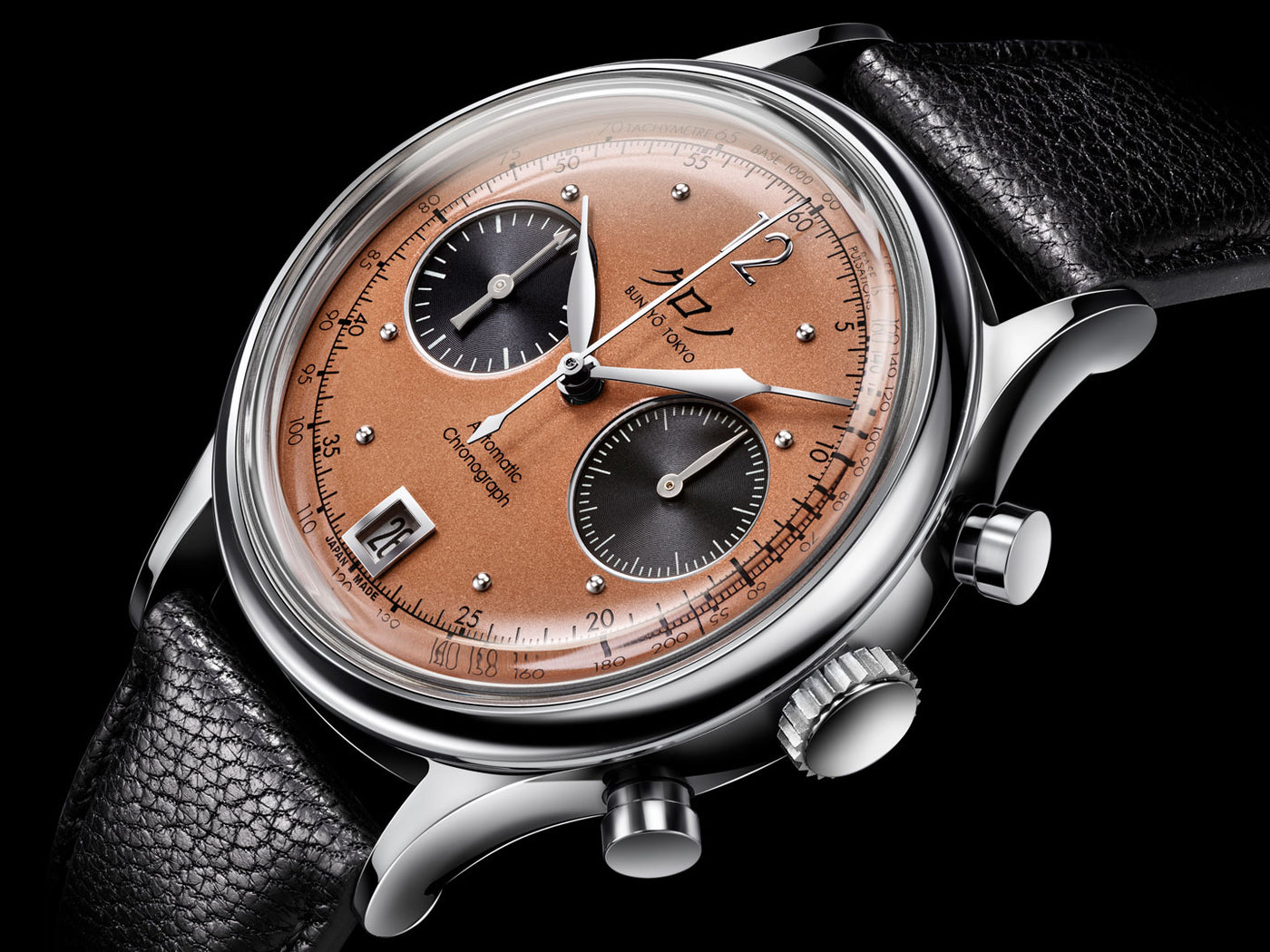
Japanese watchmaking rarely seeks emotional excess. Its strength lies in control.
French horology has always occupied a space between engineering and art. In the modern independent era, it has leaned decisively toward expression.
Brands and watchmakers such as Aubert & Ramel and Sylvain Pinaud have drawn international attention not through scale, but through visible craftsmanship. Their movements are not concealed—they are presented. Finishing becomes narrative rather than decoration.

Raúl Pagès, though based in Switzerland, is often included in this broader French-speaking creative movement due to his emphasis on traditional craftsmanship and sculptural finishing.
Maison Pequignet, based in the historic watchmaking town of Morteau, Pequignet is one of the only truly independent "Manufactures de Haute Horlogerie" in France. They are celebrated for developing the in-house Calibre Royaland are officially classified as a Living Heritage Company.
Yema, headquartered in Moreau, the brand has been producing French mechanical watches since 1948. They are best known for their robust, heritage-inspired dive and pilot watches like the Superman and Navygraf.
Meanwhile, brands such as Baltic represent a different form of independence: one rooted in design accessibility, community engagement, and rapid global resonance.
France’s contribution is not consistency. It is personality.
For much of the modern watch industry’s history, China occupied a very specific role in the global ecosystem: manufacturing base, assembly hub, and production partner to foreign brands. It was rarely discussed in the same breath as artisanal horology, and even more rarely associated with independent creative watchmaking.
That perception is beginning to shift—quietly, but meaningfully.
The development of Chinese-based artisanal horology over the past decade does not resemble the European trajectory of inherited guild traditions or the Japanese evolution of precision minimalism. Instead, it is something newer: a hybrid of technical ambition, industrial capability, design experimentation, and a rapidly growing domestic collector culture that is increasingly willing to support local mechanical creativity.
The earliest signals came from small workshops producing limited mechanical watches that prioritized finishing and architecture over volume. Unlike mass-market Chinese watch production—which has long been globally significant in entry-level mechanical and quartz segments—this new wave is defined by intent rather than scale.
A key figure in this emerging landscape is Beijing Watch Factory’s revived design language, which, while historically rooted, has been reinterpreted in recent years with a stronger emphasis on mechanical expression and decorative finishing. Alongside this, independent projects such as Behrens, Celadon, and Memorigin’s higher-end experimental pieces have demonstrated that Chinese makers are increasingly willing to explore horological identity beyond replication or cost-driven manufacturing.
Among the more visually distinctive independent brands is Behrens, which has built its reputation on unconventional case architecture and conceptual display of time. Rather than relying on classical Swiss-inspired dial grammar, Behrens frequently treats the watch as a sculptural object first, with time indication integrated into the design language rather than placed at its centre. The result is a form of horology that feels closer to industrial design or contemporary art than traditional watchmaking, yet still grounded in mechanical execution.
Another notable name is Celadon, a smaller artisanal workshop that has attracted attention for its enamel work and decorative dials. In a landscape where much of Chinese watch production has historically been associated with efficiency and scale, Celadon represents a deliberate pivot toward patience-driven craft. Its enamel pieces, in particular, highlight a growing interest in traditional decorative techniques that were once almost entirely defined by Swiss ateliers.
A further example is Fam al Hut, a more recent and increasingly discussed independent Chinese brand that approaches horology through conceptual storytelling and limited production. Rather than attempting to imitate established Swiss or Japanese design codes, Fam al Hut positions itself within a more experimental space, often blending minimalist dial construction with abstract thematic references. Its work reflects a younger generation of Chinese watchmakers who are less concerned with aligning to historical horological norms and more interested in defining a distinct visual and philosophical identity for themselves.
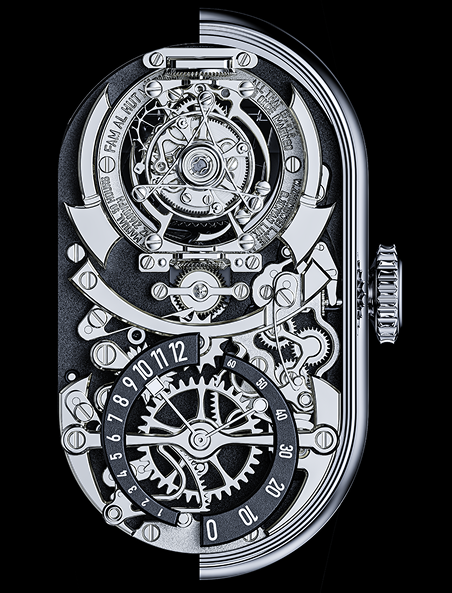
What distinguishes this broader movement is not a single aesthetic, but a growing willingness to engage with horology as a cultural discipline rather than purely a production category. Skeletonisation, artisanal engraving, avant-garde case architecture and unconventional display mechanisms are frequently used not as novelty, but as a way of asserting identity in a crowded global field.
At the same time, China’s expanding base of high-skilled machining capability has created a structural advantage that earlier generations of independent watchmakers outside Switzerland did not have. CNC precision, material engineering and dial production can now be executed domestically at a level that allows experimentation without immediate reliance on European supply chains. This has lowered one of the historical barriers to entry for independent development: infrastructure dependency.
Perhaps more importantly, a domestic collector market has begun to form that is both large enough and culturally engaged enough to sustain experimentation. While early Chinese mechanical watches were often oriented toward export or value positioning, contemporary artisanal projects are increasingly being designed with internal collectors in mind—an important psychological shift that mirrors developments previously seen in Japan and the United States.
This is not yet a consolidated “school” of watchmaking in the way Switzerland, Germany or Japan can be described. It is more accurately a formative stage: fragmented, exploratory, and still defining its own language.
The direction of travel is clear.
Where earlier decades saw China participate primarily as a manufacturing force within global horology, the current trajectory suggests a gradual emergence of independent creative identity—one that draws from industrial strength but is increasingly interested in authorship.
If the last twenty-five years of horology have been defined by decentralization, then China represents its next unresolved chapter: a region with the scale to matter immediately, and the cultural momentum to eventually define its own interpretation of artisanal watchmaking.
In that sense, it does not sit outside the new geography of horology.
It is becoming one of its most consequential additions.
Perhaps the most significant change in modern watchmaking is that geography itself is no longer predictive.

In the Netherlands, Grönefeld established itself as one of the most respected independent ateliers in Europe, combining Dutch design sensibility with exceptional finishing.
In Austria, Habring² proved that small-scale production could still achieve mechanical credibility at the highest level.
In Denmark, Arcanaut introduced experimental materials and bold industrial design language into independent horology.
In the United States, a diverse group of makers has emerged:
- RGM, maintaining American mechanical watchmaking heritage
- Weiss Watch Company, emphasising domestic production and machining transparency
- J.N. Shapiro, focused on guilloché and traditional dial arts
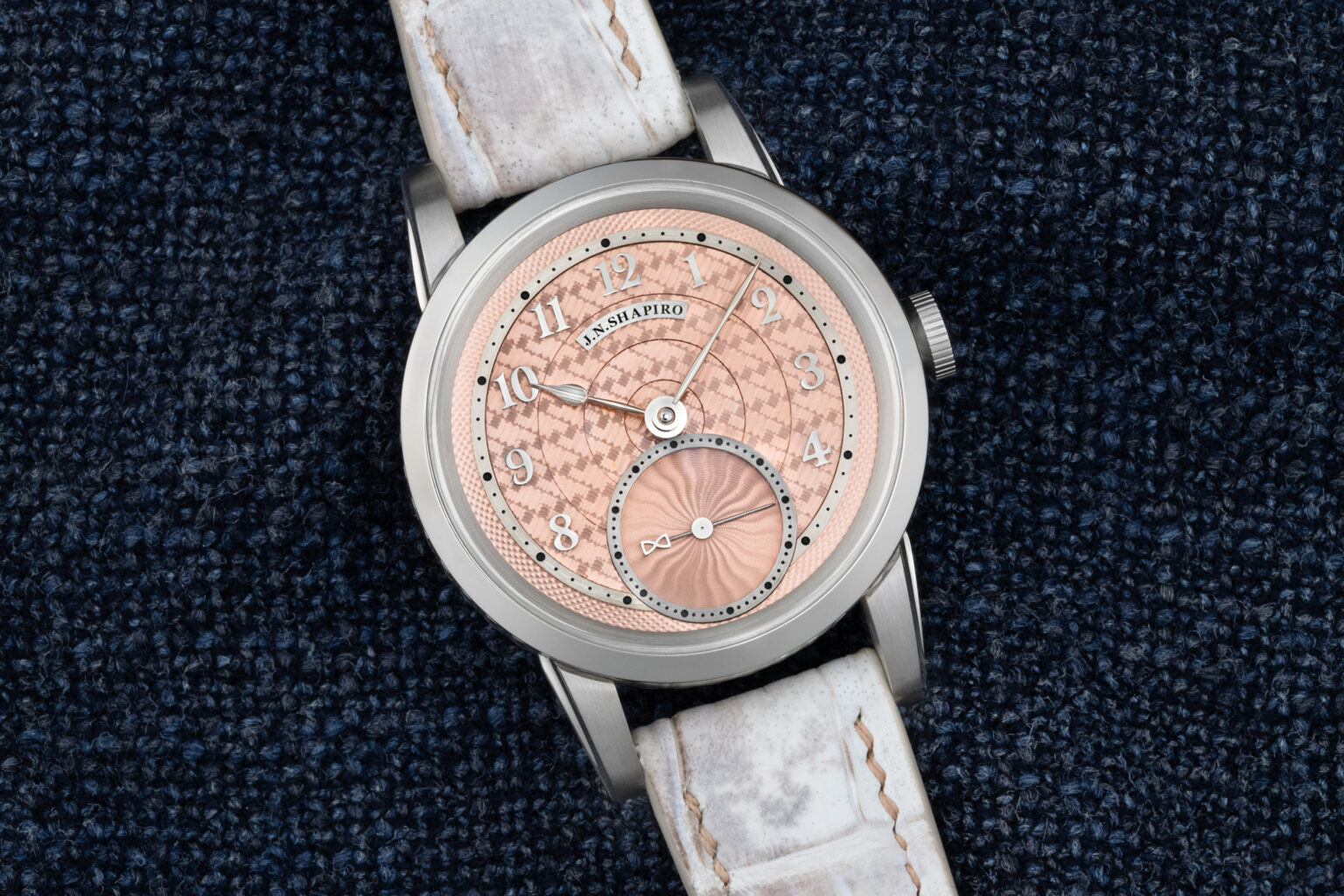
Australia has developed a quieter but meaningful presence through independent makers such as Nicholas Hacko, who represents a pragmatic, technically honest approach to watchmaking in a geographically distant market.
Canada, while not a large-scale producer, has become an important collector hub—one where independent watch culture is particularly engaged, informed and influential relative to market size.
The watch enthusiast and collector approach has undergone significant evolution over the last 25 years. What was once an audience that existed typically within many small, carefully curated private groups has now developed into a very transparent and large scale ,social ecosystem of collectors and enthusiasts with direct access to an almost infinite library of resources and platforms to support their passion. The rise of independent watchmaking cannot be separated from this change in the collector's mindset.
Where previous generations often valued brand hierarchy, modern collectors increasingly prioritise:
- direct connection with the maker
- transparency in production
- limited output
- visible finishing effort
- narrative clarity
The watch is no longer an object. It is a traceable process.
Auction results and waiting lists reflect this shift. Independent pieces frequently achieve strong secondary market performance not because of marketing, but because scarcity is now understood as a by-product of craftsmanship rather than artificial limitation.⁴
It would be incorrect to frame independent watchmaking as a challenge to Switzerland. The data does not support that view. Although not discussed in detail in this article, there are also a tremendous amount of exceptional independent Swiss watch brands that have also emerged over the last couple of decades.
The large value Swiss maisons continue to dominate global value creation in horology, and the industry remains the benchmark for technical and commercial scale.⁵
But influence works in both directions.
As independent watchmaking gained visibility, Swiss manufacturers increasingly re-emphasised métiers d’art, hand-finishing and small-batch production within their own structures. The renewed focus on guilloché, enamel work, engraving and traditional decorative crafts reflects a broader cultural shift within the industry itself.
In that sense, independence did not decentralise Switzerland. It reminded it of its own history.
The most significant change in the last twenty-five years is not that fine watchmaking now exists outside Switzerland.
It is that it no longer needs to justify where it exists.
A workshop in Tokyo, a studio in Copenhagen, a bench in rural England or a small atelier in the United States can now produce work that enters the same conversation as Geneva-based maisons—not as exceptions, but as participants.
That shift is not industrial. It is philosophical.
Great watchmaking has never been about geography alone. It has always depended on patience, restraint and the willingness to pursue detail beyond economic logic.
For much of the twentieth century, those conditions happened to be concentrated in one country.
They are not anymore.
And that may be the most important development in modern horology.
1. Federation of the Swiss Watch Industry (FH), Swiss Watch Export Statistics Overview.
2. Deloitte, Swiss Watch Industry Study 2023.
3. Watchuseek / PuristSPro historical collector community archives.
4. Morgan Stanley & LuxeConsult, Swiss Watch Industry Report 2024.
5. Europa Star, Global Watch Industry Analysis Reports, various editions.
%201.png)
