Written by: Matt Black
"We've spoken 20 minutes and you've barely asked a question."
Nicholas Bowman-Scargill wasn't wrong.
By that point in our conversation, we had covered survival rates among watch startups, the psychology of collectors, the challenges of growing an independent brand and the realities of building a business in an increasingly crowded industry. We had also touched on branding, retail, pricing, product development and leadership.
What we hadn't talked much about was Fears Watches.
At least, not directly.

The irony wasn't lost on either of us. Here I was interviewing the Managing Director of Fears during its 180th anniversary year, and yet the discussion kept drifting away from watches and toward something else entirely.
Longevity.
Because while enthusiasts often focus on the finished product on the wrist, Nicholas has spent the last decade thinking about a different challenge altogether.
How do you build a watch company that survives?
Not for a season.
Not for a product cycle.
For generations.
We’ve come to expect the modern watch industry to celebrate launch stories.
There’s a new kid on the block every week, or so it seems. Instagram feeds fill with announcements. Crowd funding campaigns appear with renderings of the next great independent darling. To the casual observer, it can feel like the industry is overflowing with opportunity.
Nicholas sees a different reality.
"If ten watch companies start today, half are gone within the first year."
It’s a grim statistic – but hey, that’s the reality.

"Now when I say gone, it may be they still have a website and a social media account. You could still order a watch. But they're no longer actively product developing. The founder has maybe gone back to their day job."
He pauses.
"I refer to those as zombie companies because they appear to exist, but they no longer really exist."
By year five?
Only one remains.
"People stop and go, 'Yeah, but there are loads of watch companies.' And I'm like, 'Yeah. There are even more that never made it into your consciousness.'"
It’s a sobering statement from someone who lives and breathes the industry.
Nicholas attends watch shows around the world, consumes industry reporting daily and regularly speaks with collectors, retailers and journalists. Even so, he's still surprised by how many brands operate just below the surface.
"I probably once a week discover a company I've never heard of. Then you look and realize they've been battling for four years. How on earth? I’m consumed by the watch industry and still discover new companies every day."
Perhaps that's why reaching ten years feels significant.
Not because Fears survived.
Because it continues to matter.
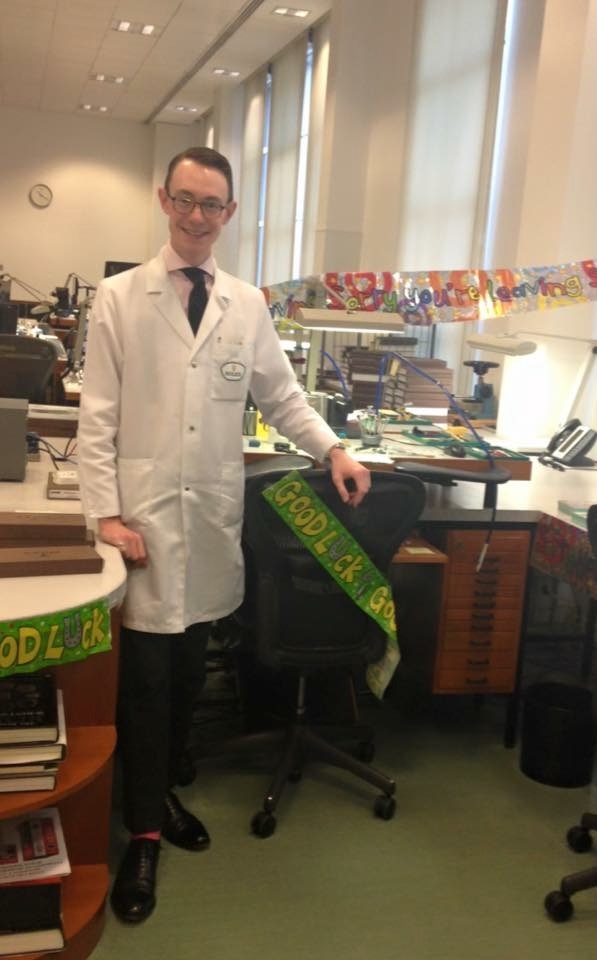
"It's very tough at ten years old to still be able to capture people's attention," Nicholas says. "A lot of companies can grow rapidly and then plateau because people get bored."
What excites him today isn't necessarily launching a new watch.
It's launching a new watch after a decade and still seeing people care.
"The thing that I'm really excited about is that after all this time, we launch a watch and the commentary is still positive. The media are still writing about it and, importantly, the Shopify pings are still coming through."
He laughs.
"You realize very quickly you can never take that for granted."
If you haven’t already picked up on it, our conversation was wide-ranging. One of the more insightful moments came through an unexpected comparison.
Pens.
Nicholas had recently gone looking online for information about a fountain pen manufacturer he admired. What he discovered was an entire ecosystem of enthusiasts.
YouTube channels. Podcasts. Reviews. Collectors – sound familiar?
People discussing pens with the same passion watch enthusiasts reserve for the latest releases.
"I was laughing and thinking, 'How on earth is there a podcast about pens?'" Nicholas smirks.
Then came the realization.
"That's exactly how ninety-five percent of the population thinks about watches."
It’s that perspective that has fundamentally shaped the way Fears approaches growth.
According to Nicholas, only about five percent of watch buyers would identify themselves as enthusiasts or collectors. The remaining ninety-five percent are buying watches for entirely different reasons.
Maybe it’s a milestone birthdays. Or a congratulatory graduation gift. Then there’s anniversaries and other milestones that life naturally ushers in.
"People who are really into watches are only five percent of the market," he says. "Ninety-five percent of people who buy watches, especially at our sort of price point, are buying one or two nice watches in their lifetime."
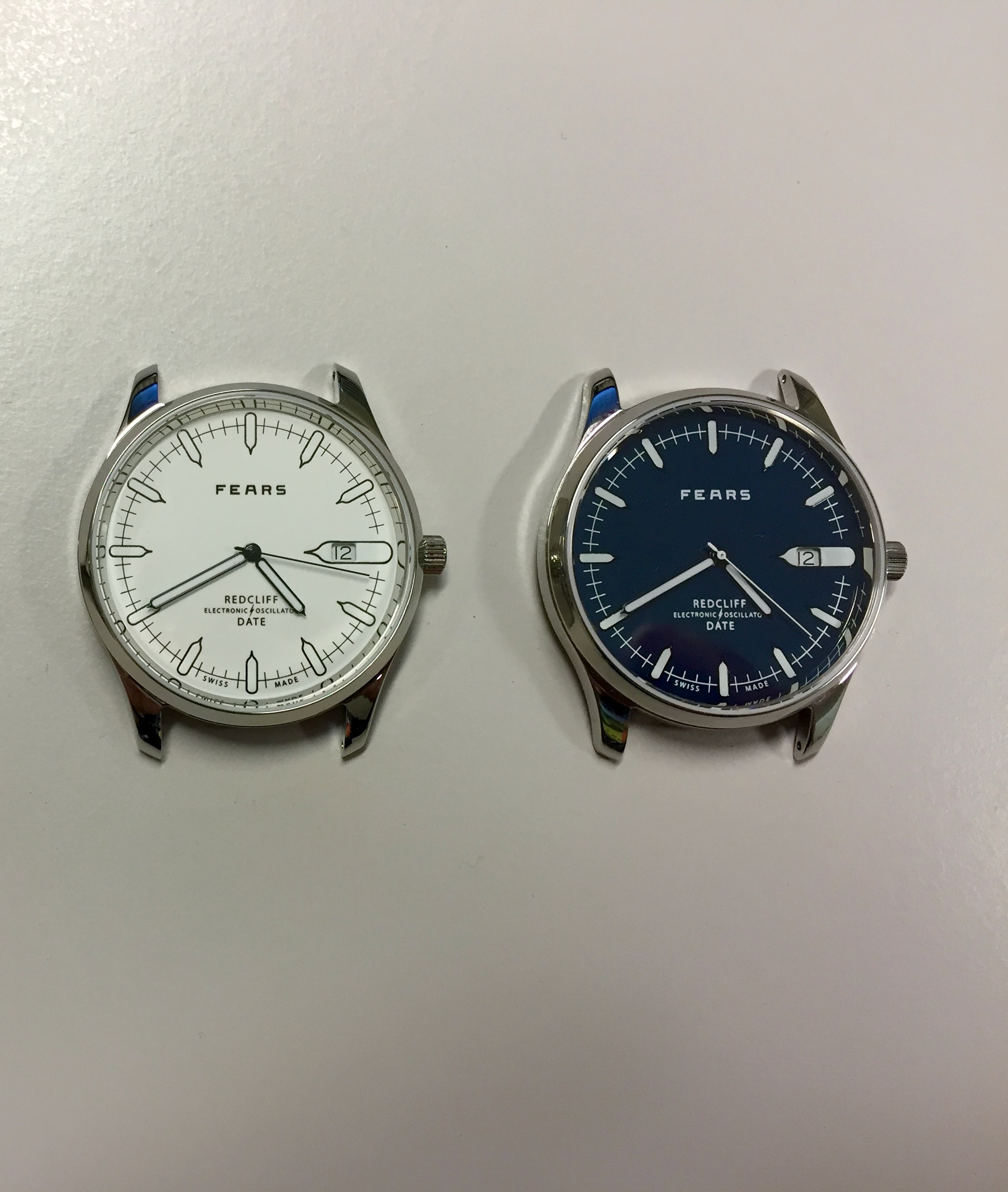
That reality creates an interesting balancing act.
How do you continue serving the enthusiasts who helped build your reputation while also appealing to a much broader audience?
For Nicholas, the answer isn't choosing one over the other – it’s understanding both.
"We have to be aware that not the entire world is like that."
The challenge becomes creating watches that feel authentic to the brand regardless of who is buying them.
"You need the five percent not to think you've sold out."
That line sticks with me.
Because it perfectly captures the tension many growing independent brands face. Grow too aggressively and risk alienating collectors. Stay too niche and limit your future.
For Fears, the goal has been finding a middle ground.
A watch should still feel unmistakably like a Fears whether it's being purchased by a seasoned collector or someone celebrating a major life milestone.
"Maybe it's not a watch every enthusiast will spend money on," Nicholas says. "But it still has to feel like a Fears."
As our conversation shifts toward branding, Nicholas becomes animated.
Not because he's talking about marketing. No – it’s more of an inward look. Because he's talking about trust.
"The power of brand is consistency."

It's a philosophy that has shaped nearly every decision Fears has made over the last decade.
Here’s some proof: for ten years, the company has published a monthly newsletter.
Not most months, but every month – even times when there wasn’t much to say.
"Even when we're kind of going, 'Oh, we've got to send a newsletter this week. We have nothing to say. What are we going to do?'"
He smiles.
"I'm like, 'We have to have a story.'"
It’s this same thinking that applies to everything else at Fears. The logo has evolved, but gradually. Colours have been changed, but deliberately. It’s always the same tone and feeling – it’s still Fears.
"People who bought into Fears ten years ago want to feel that what we're doing today is still the company they supported."
In an industry often obsessed with novelty, Nicholas seems far more interested in continuity.
That consistency also explains why Fears has been able to expand into new categories without losing itself.

Over the last year alone, the company has introduced sportier watches, pilot watches and tool-watch-inspired designs – categories that would have seemed unlikely for Fears not long ago.
Yet collectors haven't reacted negatively.
I ask myself why that is… and I think it’s because they’re buying into something deeper than that.
"They're not looking for a dive watch," I suggest during our conversation. "They're looking for a Fears dive watch."
Nicholas nods.
"Exactly."
Sure, the product changes, but the identity never does.
As our discussion continues, another theme begins to emerge.
The Nicholas who relaunched Fears ten years ago is not the same Nicholas leading the company today.
When the modern incarnation of Fears began, it was largely a one-man operation.
Growth followed, but then the pandemic hit. And then – a realization.

"During COVID, we experienced rapid growth, but I thought the company was developing. Actually, it wasn't."

The distinction is important.
"We were selling a lot. But all our processes were legacy systems. Legacy ways of doing things. Things that weren't scalable."
Growth and development, Nicholas learned, are not necessarily the same thing.
"As a company we were burning out. We were very unprofitable. And profit is a dirty word, but it's not. You need to be sustainable."
This is where the conversation turns again.
Less about watches, and more about a growing, mature responsibility.
"If I'm hiring someone, I'm persuading them to leave their job and come work for me. I need them to have confidence they're still going to have a job next month."
That realization forced Nicholas into unfamiliar territory.
We’re talking business coaching, organizational structures, processes and systems. The types of things that founders rarely dream about when launching a watch brand.

"I've had to work with a business coach to upskill myself," Nicholas reflects.
It’s a refreshingly candid admission from a founder, many of whom tend to speak of growth as if it happened naturally.
But Nicholas speaks openly about learning.
He’s grown comfortable with adapting into the leader that the company needed.
"We went through a phase of professionalizing the business. Not corporatizing it. Professionalizing it."
The distinction matters – and thanks to it – Fears now has structure.
Think managers, processes, long-term planning… succession, even.
The business is no longer dependent on one person doing everything.
And it’s all by design.

Despite all the discussion about organizational charts and sustainability, Nicholas remains, at his core, a product person.
It’s obvious from the way he talks: sheer enthusiasm while discussing tiny design decisions. His excitement in attending supplier exhibitions to examine components and finishing techniques.
It really is the little things.
"Deep down, I care whether 0.05 millimetres makes or breaks a design," Nicholas shares.

For all the responsibilities that come with running a growing company, that instinct hasn't disappeared.
"I probably still come up with two or three new watch ideas every day."
But experience has changed his perspective.
"What I've had to learn is that if you want this company to be sustainable, if you want it to grow and create good job opportunities, you can't just make what you want."
Ten years ago, the founder in him may have resisted that idea.
Today, it comes across as pure wisdom.
The most revealing moment of our conversation arrives when Nicholas begins talking about the future.
But it’s not exactly what you’d think. We don’t delve into next year's releases. He’s not focused on upcoming launches. It’s more about the future of Fears itself.
He frequently references being the fourth Managing Director in the company's history. He’s not ‘the owner,’ and doesn’t see himself as the saviour, despite breathing new life into the brand.
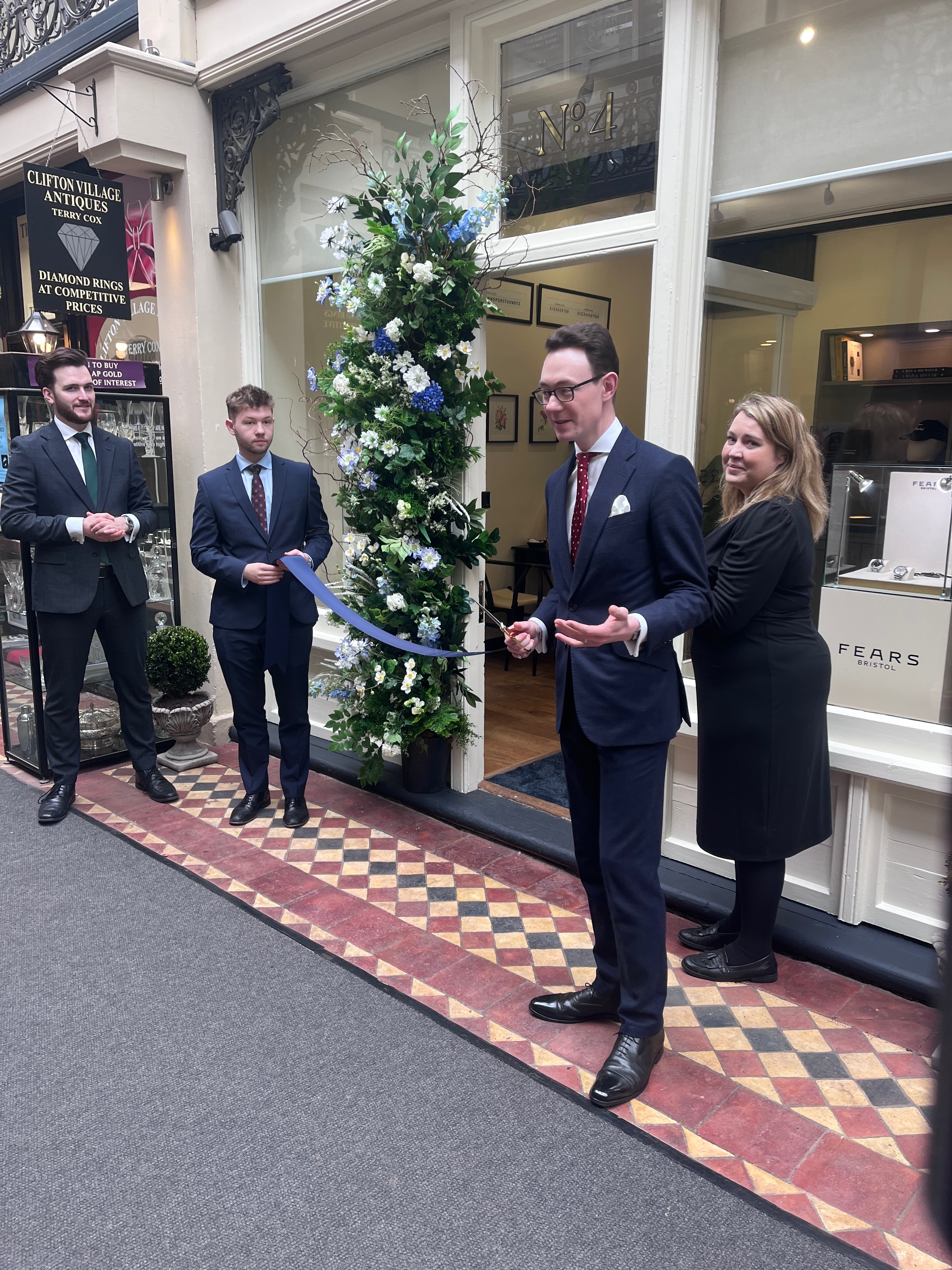
Instead, he’s ‘the fourth steward.’
"There will be a fifth Managing Director."
He says it matter-of-factly, but with a confidence that shows me means it.
Then comes the line that sits at the centre of everything we discussed.
"Fears is bigger than me."

It's a surprisingly un-founder-like statement. Particularly in an era when many brands become inseparable from the personalities who created them.
But Nicholas doesn't speak like someone building a company around himself. He speaks like someone preparing it for life after him.
"My husband and I aren't planning to have children," he tells me. "His legacy to the world is mathematics."
For Nicholas, legacy looks different. The way he speaks about it presents as responsibility – to his employees, to his customers, to the history that began long before he arrived and presumably, will continue after he’s gone.
It's perhaps the clearest explanation of why he spends so much time thinking about systems, structure and sustainability.
Toward the end of our conversation, Nicholas tells me about a tradition he follows religiously. To me, it’s a perfect metaphor for who he is and why the company continues to find success.
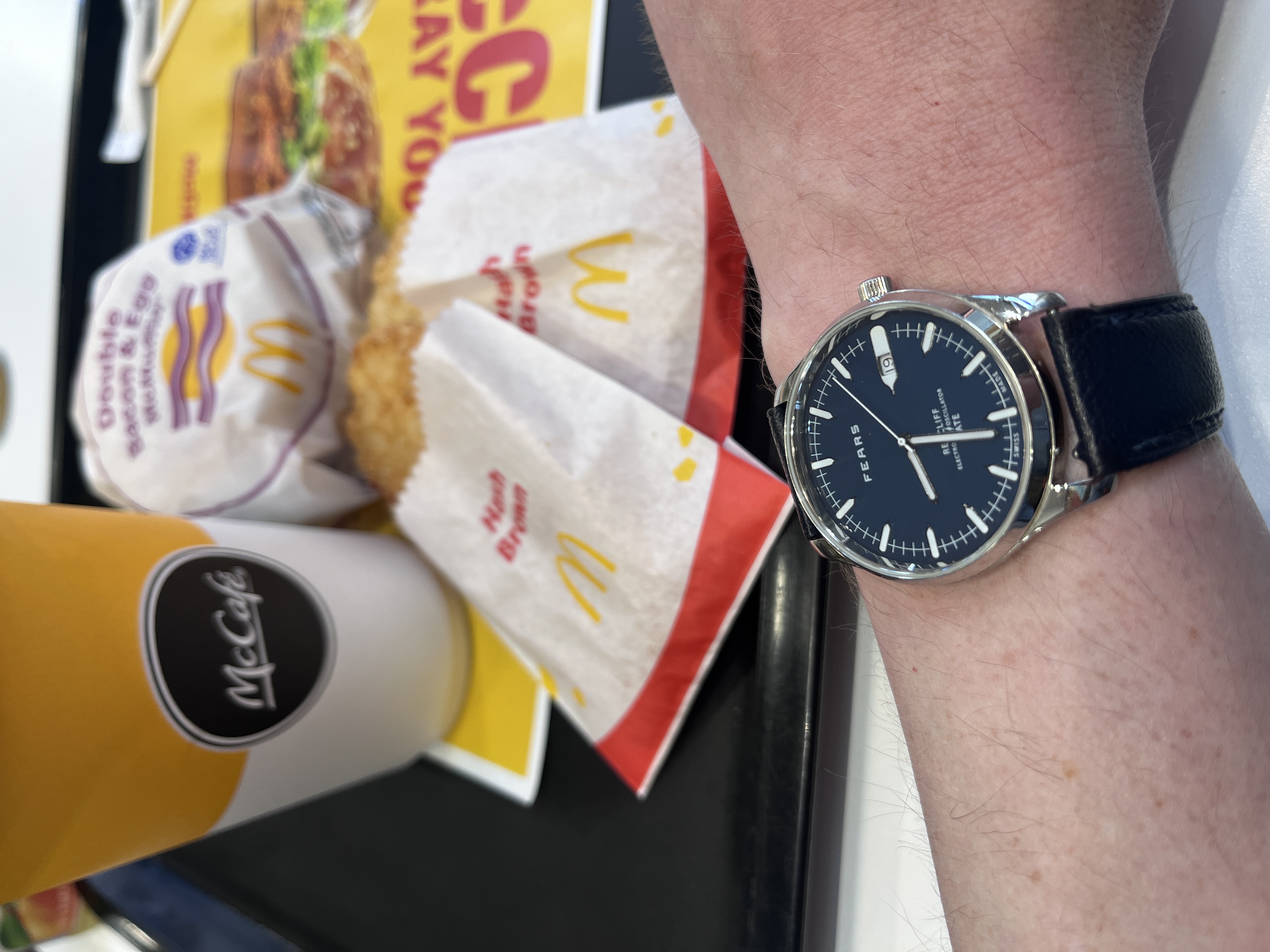
Every launch day, he straps on his Redcliff Quartz, serial number one – the very first modern Fears watch.
Then he goes to McDonald's for breakfast.
It’s a ritual that began ten years ago.
On the morning Fears officially returned to the world, he was rushing between commitments and grabbed a quick breakfast before a launch event.
"It's become my lucky charm," he says.
But it’s clearly more than that.
"It's also a reminder."
A reminder of where the company started and the hard work and sacrifice it took to get there.
As we wrap up our conversation, it strikes me that this small ritual perfectly captures Nicholas Bowman-Scargill's approach to leadership.
One eye firmly on the future, the other remembering exactly where the journey began.
In a watch industry obsessed with the next release, the next trend and the next headline, Nicholas is focused on something far less glamorous.
Making sure the company still matters decades from now.
While time remains the business of Fears, its future will be measured not in hours or minutes, but in the people who carry its values forward.
%201.png)
