Written by: Matt Black
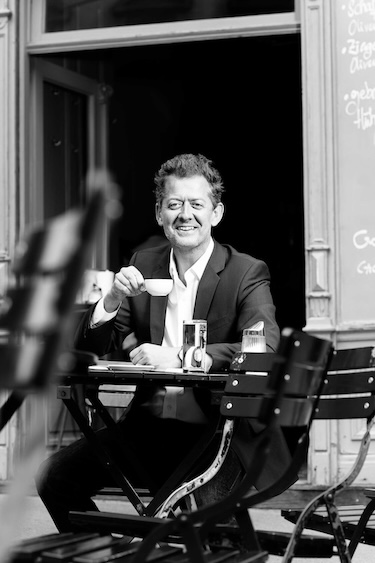
Spend more than five minutes speaking with Robert Punkenhofer and you begin to understand that for him, time is not a constraint but a medium.
He speaks in layers – of emperors and archives, of curators and collectors, of Vienna then and Vienna now. There is something faintly surreal about it, as though you’re in conversation with a time traveller who has one foot in the Habsburg court and the other planted firmly in the 21st century. It should perhaps come as no surprise that he is the man who chose to resurrect Carl Suchy & Söhne, a 19th-century watchmaking house once known as the Emperor’s Choice.
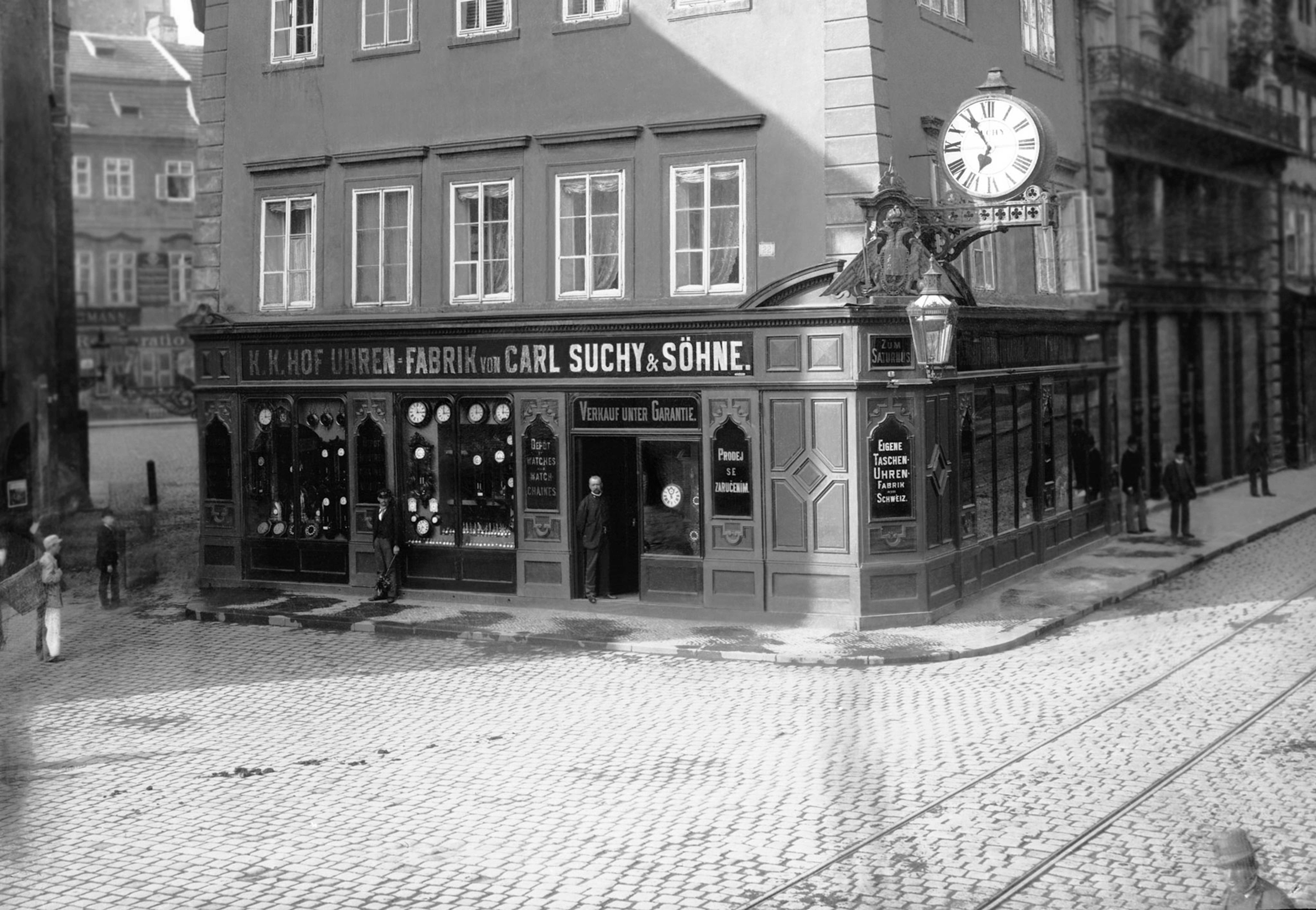
The brand’s origins date back to 1822, when Carl Suchy established his workshop in what was then Bohemia, the industrial heartland of the Austrian Empire. By the late 19th century, the name Suchy was synonymous with technical excellence. The family expanded operations to Prague, Vienna and La Chaux-de-Fonds. Letters of recommendation to the Habsburg court praised not only the quality of the work, but the character of the man himself – diligent, innovative, God-fearing and respectful of the Emperor. It’s no surprise that Suchy would ultimately become an official purveyor to the imperial court.
And then, as so often happens, the story unraveled – not with war, or manufacturing missteps, but with family discord. By the third generation, internal disputes and mismanagement amongst Suchy’s children saw the company fade into obscurity.
When Punkenhofer first encountered the name more than a decade ago, he wasn’t a watch insider. He was a curator, diplomat, and founder of Vienna Art Week. He was researching historic imperial brands when he stumbled upon Suchy – an extraordinary legacy reduced to a lonely Wikipedia entry and scattered archival fragments.
For many, that would have been the end of the curiosity. But for Punkenhofer, it was the beginning of an obsession.
“I didn’t want to carry the ashes,” he says, recalling his early decision-making process. “I wanted to carry the creative fire.”
That distinction is crucial. From the outset, his goal was not to recreate 19th-century pocket watches or drown the brand in imperial nostalgia. Instead, he asked a different question: If Carl Suchy were alive today, what would he create?
The answer lies in Vienna.
A simple stroll through the city’s First District and you feel the weight of culture – not just in the museums and opera houses, but in the geometry of the buildings, the restraint of the façades, the quiet confidence of Viennese modernism. This aesthetic language – clean, reduced, seamless – would become foundational to the revived brand.
Collections like the Belvedere and Waltz No.1 embody that sensibility. The dials are spare yet nuanced; the integration between strap, case and crystal is fluid - architectural. Even the complications resist convention. The Waltz, for instance, replaces a traditional seconds hand with a rotating subdial – a poetic nod to Vienna’s unhurried rhythm. “Not every second counts,” Punkenhofer says with a smile. “Vienna is not New York.”

It should come as no surprise then that these design decisions are not gimmicks. They are philosophical statements.
Luxury, in Punkenhofer’s view, is not quite reductive to price or prestige. It is a synchronization of craftsmanship, exclusivity, creativity and service. Take production for instance, which remains intentionally limited – approximately 150 pieces per year, distributed through a tightly curated network of retailers. Growth is measured. Expansion is deliberate.
That restraint is perhaps surprising in an industry often driven by scale and spectacle. But for Punkenhofer, the responsibility of stewarding a heritage name leaves little room for shortcuts.
He recalls an early meeting in Hong Kong with an industry executive who suggested producing the watches at a reduced cost in Asia and capitalizing on the imperial backstory for mass-market profit. “The old Suchy would turn in his grave,” Punkenhofer remembers thinking. The conversation clarified his mission: if the brand were to return, it would do so at the highest level.
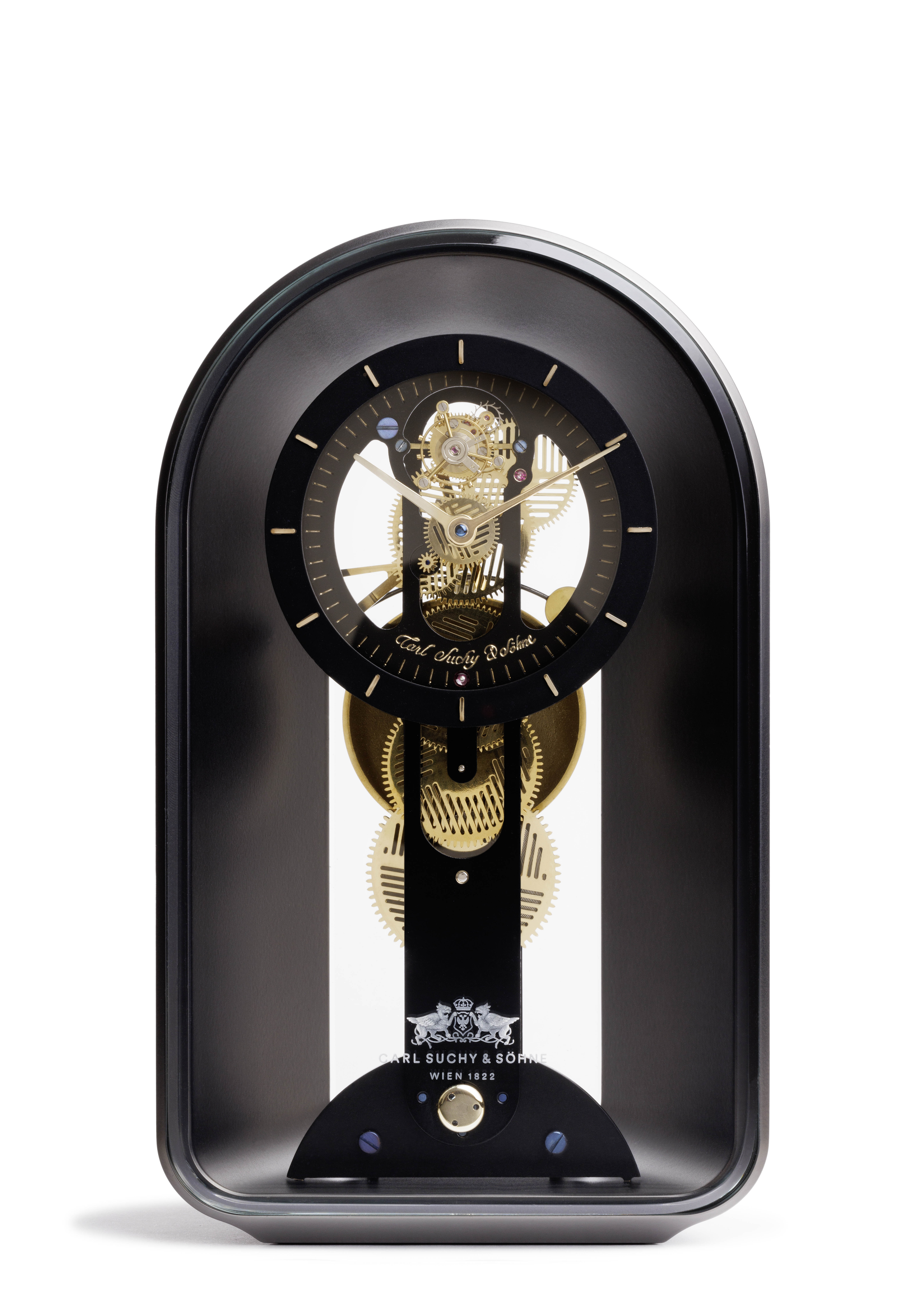
Today, that commitment is reflected in collaborations with respected Swiss partners for movement production and in the painstaking details often invisible to casual observers – the micro-engraving on a rotor inspired by the façade of the Belvedere Palace, the careful finishing of bridges, the sculptural ambition of the brand’s contemporary table clocks.
But if craftsmanship is one pillar of the revival, storytelling is another – and perhaps the more precarious one.
With nearly two centuries of documented history, it would be easy to lean entirely on imperial grandeur. Punkenhofer is acutely aware of that temptation. “For legacy alone, no one buys a watch,” he says. The challenge lies in finding the balance: honouring the past without being trapped by it.
Early on, he experimented with edgier visual campaigns, collaborating with art students who treated the watches as conceptual objects. Some retailers recoiled, urging him to stick with safer, more traditional imagery. To this day, the tension remains unresolved – and productively so. The brand continues to navigate that fine line between cultural depth and contemporary relevance.
Punkenhofer’s background in the art world informs much of this thinking. As founder of Vienna Art Week, he views watchmaking not merely as manufacturing but as a curatorial act. A watch, like an exhibition, begins with an idea. It requires cohesion, narrative and conviction. It must resonate emotionally as well as intellectually.
There are striking parallels between collectors of contemporary art and collectors of independent watchmaking – both communities driven by passion, discernment, and, at times, obsession. Punkenhofer has witnessed the frenzy at art fairs; he now sees the same fever at watch shows. The difference is scale. The similarity is devotion.
What is perhaps most compelling about his stewardship of Carl Suchy & Söhne is the absence of cynicism. Even after navigating COVID disruptions, slow early sales and the relentless pressures of entrepreneurship, he speaks with the enthusiasm of someone still astonished that the project exists at all.
Every new retailer acceptance, every museum exhibition, every email from a collector who discovered a historic Suchy piece in a grandfather’s drawer – these are milestones, not metrics – and ones that Punkenhofer holds dear.
He recently located Carl Suchy’s grave in Prague with the help of a university researcher. The discovery was not a marketing opportunity; it was personal. A reconnection. A reminder of the responsibility he feels.

When asked how he hopes future generations will understand the brand, his ambition is disarmingly clear: to restore Carl Suchy & Söhne to the stature it once held. To build a Viennese manufacturing facility. To open a flagship in the city center. To ensure that the name once again commands respect not because of nostalgia, but because of contemporary excellence.
In many ways, the revival of Carl Suchy & Söhne mirrors Vienna itself – a city negotiating its imperial past while asserting its modern identity. The watches do not shout. They do not chase trends. They ask for a slower gaze.
Luxury, Punkenhofer says at one point, is having time.
Time to think. Time to refine. Time to create something meaningful.
In an industry where urgency often masquerades as innovation, Carl Suchy & Söhne offers a different proposition: that relevance can be built patiently, that legacy can be reignited without being exploited, and that sometimes, the most radical act is restraint.
Two hundred years after Carl Suchy first set his tools to metal, the fire – carefully, deliberately – burns again.
%201.png)
